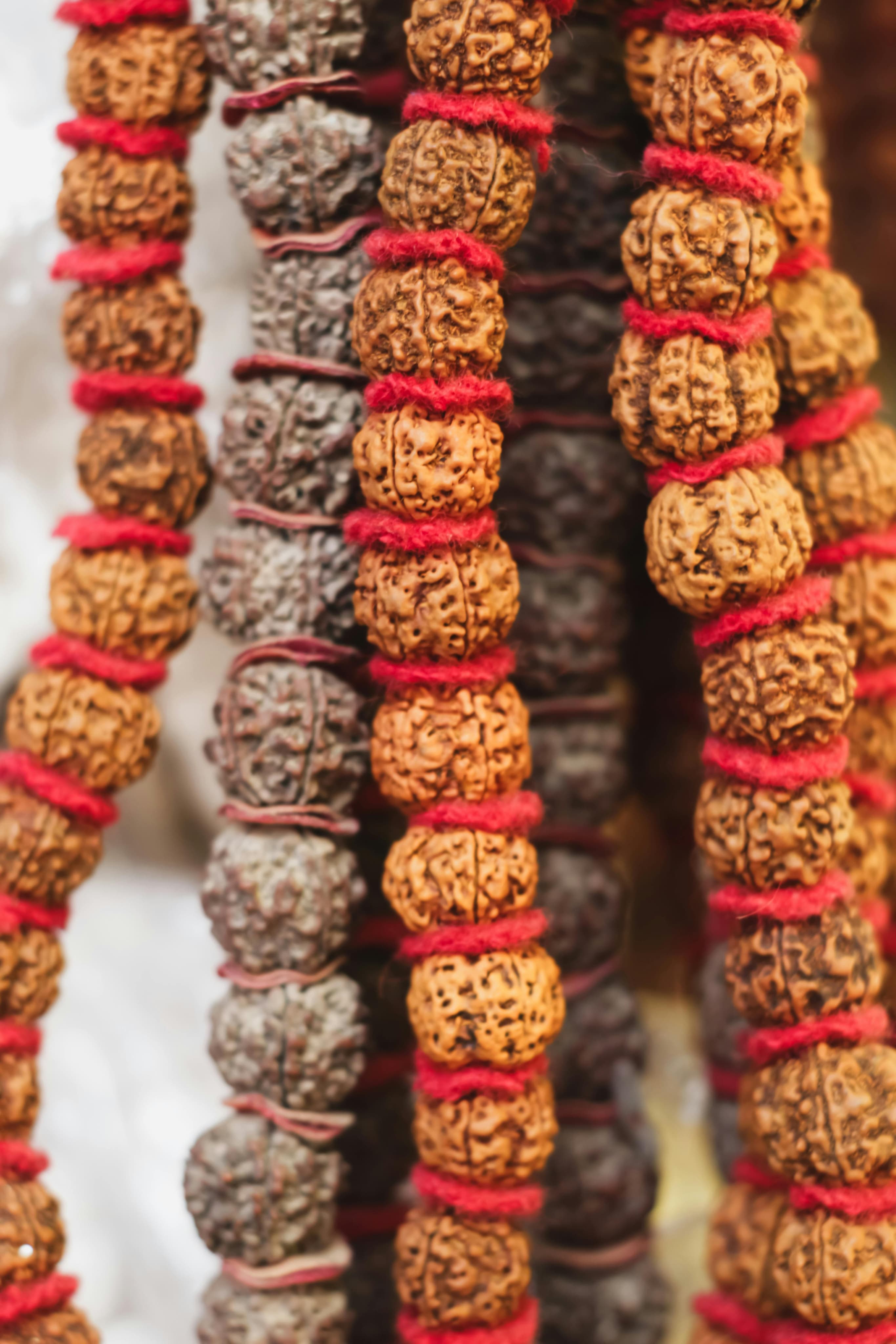
Understanding Rudraksha Mukhi: What the Number of Faces Really Means
A guide to how mukhi (faces) are counted, why they matter, and how to read them honestly without overstating their significance.

Every Rudraksha bead is classified by its mukhi — the natural lines or segments running down its surface. These lines form during growth and are not added or carved afterward, which is why mukhi count is one of the first things examined during verification.
Different mukhi counts are traditionally associated with different forms of Shiva and different areas of focus, from grounding and routine to clarity and discipline. These associations come from long-standing tradition rather than guaranteed outcomes, and we describe them as context for your practice rather than promises.
Before a Rudraksha is listed, the mukhi lines are checked manually under good lighting and cross-checked using non-destructive testing, so the number you see described is the number that's actually present on the bead.